Feel Better Feel Great Ep 171
Is Your Period Coming Too Soon? The Truth About Short Cycles
Let’s talk about what that means, when to be concerned, and how you can use root-cause insights to lengthen your cycle naturally and feel better again.
Do you feel like your period shows up way too often — maybe every three weeks instead of once a month? As soon as it ends, it feels like it’s already starting all over again.
You’re not alone. Roughly 16% of women experience cycles only 21 to 25 days long. But here’s the key: frequent periods aren’t random. They’re your body’s way of signaling that something deeper is going on.
Let’s talk about what that means, when to be concerned, and how you can use root-cause insights to lengthen your cycle naturally and feel better again.
What’s Normal — and What’s Not
First, let’s define what a healthy cycle looks like. A normal menstrual cycle typically lasts 26 to 32 days, with the average around 28 or 29. Anything shorter than 26 days is considered a short cycle.
For years, medicine considered 21 to 35 days “normal,” but newer research and clinical experience show that 21 days is too short and 35 days is too long.
Your cycle begins on the first day of bleeding before 4 p.m. and ends the day before your next period starts. When that time frame becomes shorter than 26 days, it’s a sign that your body’s rhythm — your hormonal symphony — is out of tune.
Is It Really a Short Cycle — or Breakthrough Bleeding?
Sometimes, what looks like a short cycle is actually breakthrough bleeding — light spotting in the middle of your cycle that’s often due to hormone imbalance.
Both situations point to the same core issue: your hormones are misfiring.
The Root Causes of Short Cycles
Estrogen Dominance (or Estrogen Excess)
When estrogen dominates over progesterone, the uterine lining builds up faster. That lining becomes thicker — and more fragile — causing it to slough off early. The result? Your period arrives before it’s due.
Low Progesterone
Progesterone’s role is to hold the uterine lining stable for about two weeks after ovulation. If levels are low, the luteal phase shortens, and bleeding begins early.
Chronic Stress
Stress hormones, like cortisol, override the reproductive system. When the body is in survival mode, it deprioritizes reproduction — causing irregular, shortened, or even skipped periods.
Thyroid Imbalance
Both an overactive and underactive thyroid can lead to more frequent bleeding. The thyroid and reproductive hormones are deeply connected.
Perimenopause (and Misdiagnosis of It)
Yes, cycles may shorten as women approach menopause (usually around 50–52). But if you’re in your 30s or early 40s and told you’re in perimenopause — that’s likely stress and hormone rhythm disruption, not aging. We can rebalance that.

When to Take a Closer Look
You should take a deeper look if you notice:
-
Cycles shorter than 21 days
-
Heavy bleeding that drains your energy
-
Constant spotting or little time between cycles
-
Painful or irregular flow
-
Fatigue, irritability, or worsening PMS
Your period is your body’s monthly report card — and these symptoms mean something is off.
Natural Ways to Support a Longer, Healthier Cycle

1. Nourish Your Body with Key Nutrients
- Vitamin B6 supports progesterone and helps improve sleep.
- Magnesium calms the nervous system, supports 400+ processes in the body, and helps muscles relax.
- Vitamin C supports hormone balance and reduces PMS symptoms.
- Protein-rich meals (plant or animal) stabilize blood sugar — which supports healthy hormone rhythm.
2. Balance Stress — Don’t Just “Reduce” It
You can’t eliminate stress, but you can organize it. Unchecked stress is a rhythm disruptor.
Gentle movement, journaling, deep breathing, prayer, and time in nature can restore your body’s natural calm.

3. Prioritize Sleep
Sleep isn’t optional. It’s when your body resets your hormones and nervous system. Aim for consistent, restorative sleep — ideally before 11 p.m.
4. Use Herbal and Functional Supports Wisely
- Chasteberry (Vitex) helps lengthen the luteal phase and balance progesterone.
- Fem Balance Forte provides botanical support for hormone regulation.
- Adrenal Forte strengthens stress resilience with adaptogens.
- Omega-3s and anti-inflammatory foods help regulate prostaglandins — compounds that control uterine contractions and inflammation.
A Real-Life Story
A woman in her mid-30s came to me with cycles every 21 days. She felt moody, drained, and stuck in an endless loop of PMS.
When we ran her hormone test, her results showed low progesterone and high stress hormones — exactly what her symptoms hinted at.
We made a few changes:
- Added magnesium and B6 at night
- Supported her luteal phase with Fem Balance Forte
- Focused on stress management and sleep
Within four months, her cycle lengthened to 28 days — and her energy and mood returned. She told me she finally trusted her body again.
That’s what happens when you stop guessing and start listening.
The Bottom Line
If your periods are showing up too soon, your body is sending you a clear message.
Short cycles are not random — they’re rhythm problems that can be corrected when you uncover what’s driving them.
When you understand your hormones, you can restore balance, regulate your cycle, and feel in control again.
Ready to Understand Your Hormone Rhythms?
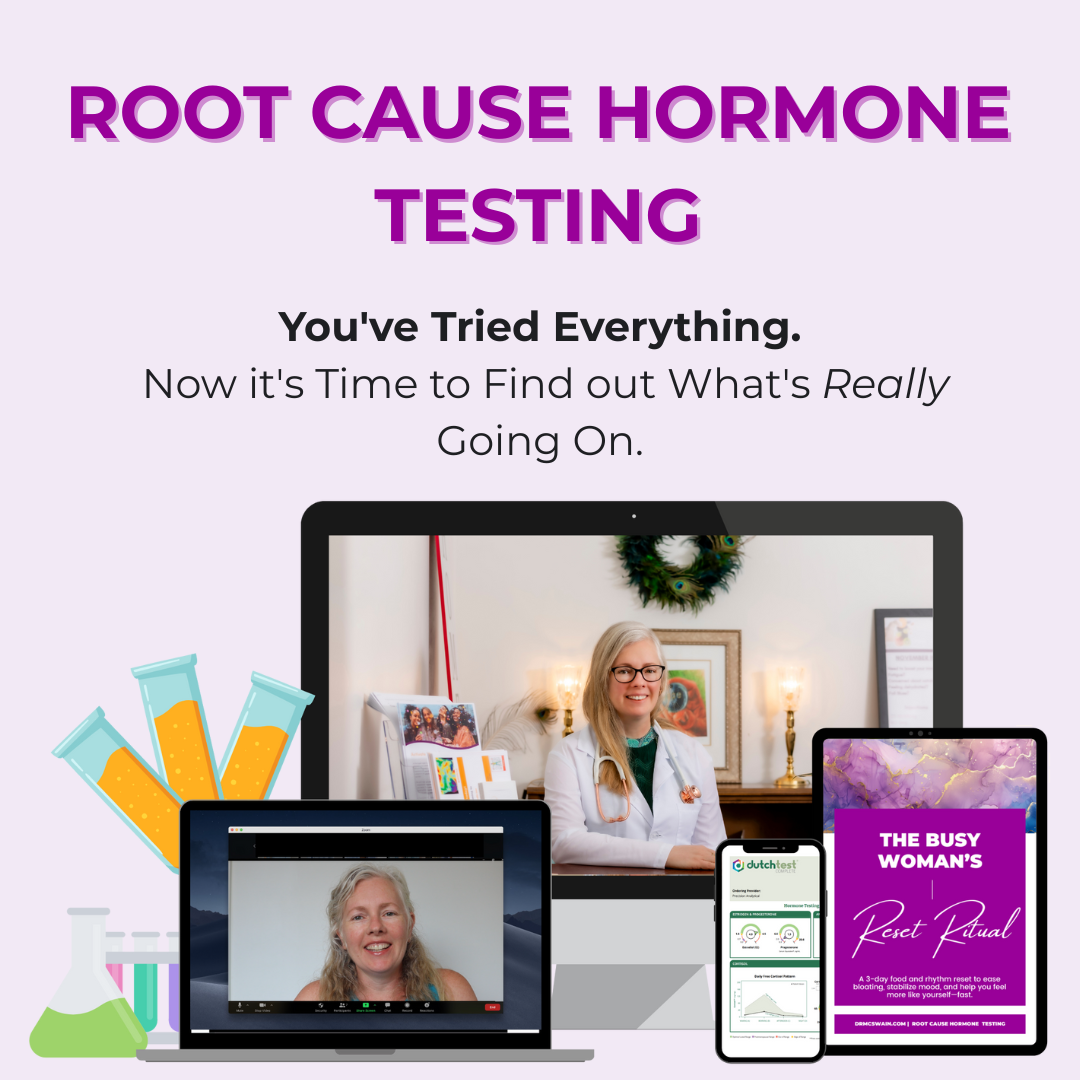
Take the first step toward real answers with Dr. McSwain’s Root Cause Hormone Testing — an at-home hormone test with a personalized video interpretation to help you understand your labs and uncover the deeper reasons behind your symptoms.
Tune into the Feel Better, Feel Great podcast for more holistic and functional insights every week.

MCHM MAIN
1909 E Michigan Ave
Lansing MI 48912
USA
(616)264-6556
Resources
© 2025 DrMcswain. All Rights Reserved.
Site Conceived By HealthProWebstie.com