Feel Better Feel Great Ep 172
The Real Reason Your Period Lasts 8 Days — And What It’s Really Telling You About Your Hormones
Have you ever felt like your period just won’t end? Maybe it stretches to eight, nine, or even ten days — long after everyone else’s has stopped. You start wondering, What’s wrong with me?
Have you ever felt like your period just won’t end? Maybe it stretches to eight, nine, or even ten days — long after everyone else’s has stopped. You start wondering, What’s wrong with me?
You’re not alone. Prolonged bleeding is one of the most common concerns I see in my practice. But here’s the truth: long periods aren’t random or unlucky. They’re your body’s way of signaling that something deeper is out of rhythm — often your hormones, thyroid, or overall health.
Let’s talk about what’s really going on, how to find the root cause, and what you can do to restore balance naturally.
What’s Normal — and What’s Not
A typical period lasts between three to seven days, averaging around five. If your bleeding continues beyond seven days, it’s considered prolonged.
Prolonged bleeding doesn’t just mean inconvenience — it affects your mood, energy, and quality of life. When your body loses more blood than it should, fatigue sets in, recovery takes longer, and your hormone system struggles to catch up.
Meet Sarah: A Real-Life Example
Sarah, a 37-year-old patient of mine, had eight-day periods that left her completely drained. Each month, she felt like she was climbing a mountain just to recover — only to tumble back down again as her next cycle began.
When we ran her root-cause hormone testing, we discovered two key issues:
- Low progesterone
- A sluggish thyroid
These imbalances were the reason her body couldn’t regulate her menstrual cycle properly. Once we addressed those root causes, supported her sleep, optimized nutrients like magnesium and B vitamins, and added targeted thyroid and stress support, her period shortened to five or six days — and her energy came back.
She told me, “I finally feel like myself again.”
Why Your Period Might Be Lasting Too Long
Hormone Imbalance
Too much estrogen without enough progesterone thickens the uterine lining, making your bleeding last longer.
Thyroid Dysfunction
A sluggish thyroid can slow metabolism and disrupt the timing of your cycle, leading to prolonged bleeding.
Insulin Resistance
When insulin levels are high, estrogen levels rise too. This is the body’s way of storing “stress,” but it can also make your periods heavier and longer.
Structural Issues
Fibroids, polyps, and adenomyosis (uterine tissue growing into the muscle wall) are physical causes that can only be seen through proper imaging — ideally reviewed by a clinician who reads the ultrasound images themselves, not just the report.
Chronic Stress
High cortisol throws off ovulation and progesterone balance. Stress isn’t just emotional — it’s biochemical, and it directly impacts your hormones.
Perimenopause
During your late 30s and 40s, hormone fluctuations can make cycles longer and heavier. While many call this “perimenopause,” it’s often more about stress, nutrient depletion, and thyroid health than age alone.
Finding the Root Cause: The Power of Functional Testing
When your period is off balance, guessing isn’t enough. Functional and root-cause hormone testing gives us insight into:
- Estrogen and progesterone ratios
- Thyroid performance (T3, T4, TSH, antibodies)
- Insulin and cortisol levels
- Nutrient status (iron, magnesium, B vitamins)
These tests paint a complete picture of what your body needs to heal — and help you stop guessing about what’s really driving your symptoms.
Natural Ways to Shorten Your Period and Balance Hormones
-
Nourish Your Body with the Right Foods
- Iron-rich foods like grass-fed beef, lentils, and leafy greens help replenish what’s lost during bleeding.
- Anti-inflammatory foods such as omega-3–rich nuts, seeds, and fish reduce hormone-related inflammation.
- Cruciferous vegetables like broccoli, cauliflower, and cabbage help your liver break down excess estrogen.
-
Ditch the Energy Crutches
Alcohol, caffeine, and processed sugar might offer quick boosts — but they strain your hormones and worsen fatigue. Replace them with berries, herbal teas, or a green powder blend for gentle, sustained energy.
-
Prioritize Sleep and Stress Recovery
Sleep is not optional. Your hormones reset at night — so aim to be in bed by 10 or 11 p.m. Give yourself permission to rest, not just recover. Simple grounding practices like breathing, walking barefoot outdoors, or taking a few quiet moments to notice your surroundings can powerfully reset your stress response.
-
Supplement Strategically (with Guidance)
In Sarah’s case, we used:
- Fem Balance Forte to support progesterone balance
- Optimal Magnesium for muscle tone and uterine health
- Be Calm to regulate the nervous system
- DIM + EstroCore to help the body process estrogen
- Plant-based liquid iron to replenish iron stores safely
Pro tip: if your liquid iron tastes good, your body probably needs it. When it starts tasting unpleasant, that’s your cue to stop for now — your body’s stores are replenished.
When to Seek Help
Call your healthcare provider (or schedule a functional medicine consult) if:
- Your bleeding lasts longer than 10 days
- You change a tampon or pad every 1–2 hours
- You pass large clots regularly
- You feel dizzy, weak, or short of breath
You deserve more than coping — you deserve answers.
The Bottom Line
Your period is a monthly report card for your hormones. If it’s too long, too heavy, or too exhausting, your body is signaling that something is out of balance.
With the right diagnostics, root-cause hormone testing, and lifestyle support, you can restore your natural rhythm, shorten your cycles, and reclaim your energy.
You don’t have to accept eight-day periods as “normal.” There are real answers — and you deserve them.
Ready to Understand Your Hormones?
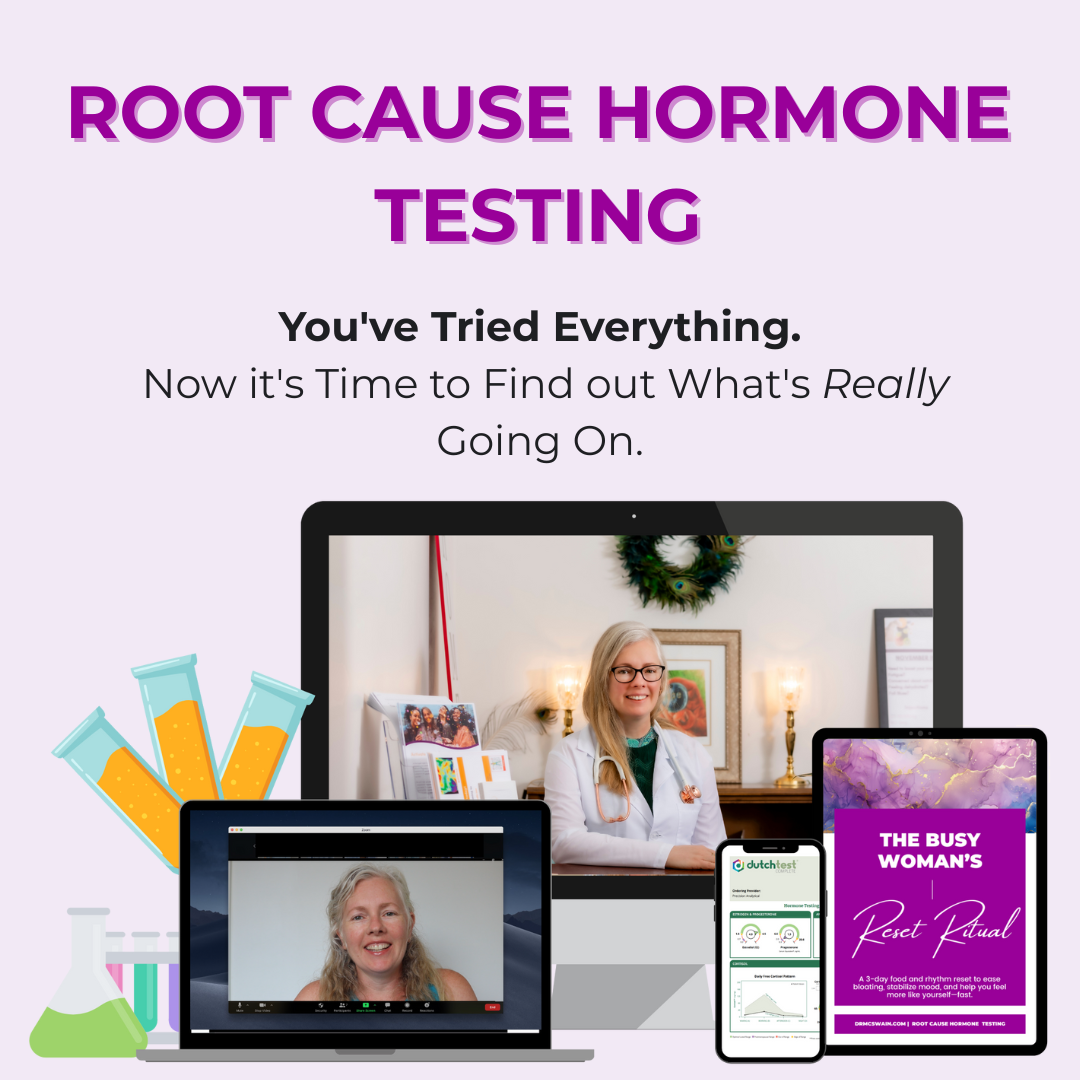
Take the first step toward clarity with Dr. McSwain’s Root Cause Hormone Testing — an at-home hormone test with a personalized video interpretation to help you understand your labs and uncover the deeper reasons behind your symptoms.
Tune into the Feel Better, Feel Great podcast for more holistic and functional insights every week.

MCHM MAIN
1909 E Michigan Ave
Lansing MI 48912
USA
(616)264-6556
Resources
© 2025 DrMcswain. All Rights Reserved.
Site Conceived By HealthProWebstie.com