Feel Better Feel Great Ep 173
Her Cramps Vanished. So Did Her Libido. The Hidden Cost of Birth Control.
Stories like hers are common. They’re not “broken-body” stories; they’re biology stories. And most women were never told what to expect.
Three weeks after starting the pill, her cramps were gone. Two months later, her skin looked better.
But her spark—the lightness that made her feel alive—disappeared.
By month three, Rachel felt calm on paper but disconnected inside. When she finally stopped the pill, her sleep improved, yet her cycle went missing for seventy days.
Stories like hers are common. They’re not “broken-body” stories; they’re biology stories. And most women were never told what to expect.
What the Pill Really Does
Birth control is powerful medicine. It prevents pregnancy.
But it doesn’t regulate your hormones—it replaces them.
When you take hormonal contraception, the brain stops signaling the ovaries to ovulate. Your natural rhythm of rising and falling estrogen and progesterone flattens into a steady, synthetic dose.
At first, it feels like peace: lighter periods, fewer cramps, predictable cycles. But the same steadiness that calms your symptoms can also quiet your energy, your drive, even your joy.
Why Mood and Motivation Change
Estrogen and progesterone do more than run your cycle. They influence serotonin, dopamine, and GABA—the brain chemicals that shape happiness, focus, and calm.
Swap those natural waves for synthetic ones and the brain chemistry shifts. Some women feel stable; others feel dulled.
If you’ve ever thought, “I’m not sad—I’m just not me,” you’re describing that shift. It isn’t weakness. It’s physiology.
The Quiet Nutrient Drain
Hormonal birth control increases your need for nutrients that power energy, mood, and detox:
- B vitamins – help with focus, energy, and estrogen clearance
- Magnesium – calms the nervous system and supports sleep
- Zinc – vital for thyroid health, skin, and immunity
- CoQ10 – fuels every cell’s energy production
When those run low, fatigue, skin changes, or irritability can creep in. Supporting your body while on the pill—or when coming off—is essential, not optional.
Finding the Root Cause: The Power of Functional Testing
Coming off the pill means your brain and ovaries have to reconnect. That re-calibration can bring irregular cycles, breakouts, or mood changes. It doesn’t mean your body is failing—it’s learning its rhythm again.
If your period hasn’t returned within three months, or you notice heavy bleeding, severe pain, or deep mood changes, it’s time for a check-in. You deserve care that listens.
How to Support Your Hormones
Eat enough protein and fiber.
They steady blood sugar and help process hormones.
Rebuild nutrient stores.
Focus on magnesium, zinc, and B-complex vitamins.
Support your liver and gut.
Hydration, cruciferous veggies, and bitter greens help clear used hormones.
Track, don’t obsess.
Note mood, energy, and sleep—your body is always sending data
Test, don’t guess.
Root-cause hormone testing reveals where your rhythm truly stands
The Takeaway
If you’re thriving on birth control, that’s perfectly fine. If you’re struggling, you’re not imagining it.
The goal isn’t to label birth control good or bad—it’s to give you informed choice.
When you understand your own rhythm, confusion gives way to confidence. That’s when healing begins—and when you start to feel better, and feel great.
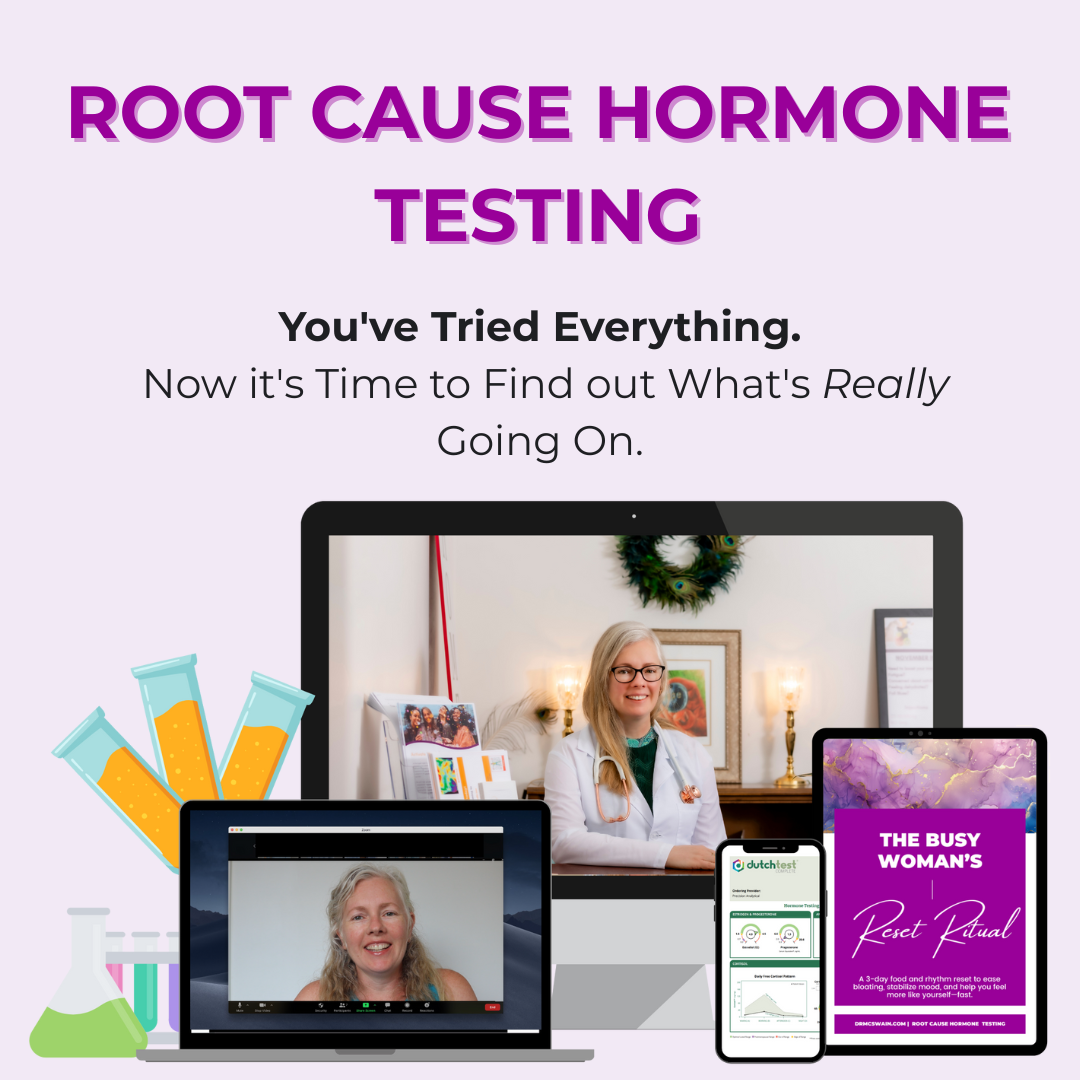
Learn more about Root Cause Hormone Testing—the first step in your Hormone Rhythm Reset.

MCHM MAIN
1909 E Michigan Ave
Lansing MI 48912
USA
(616)264-6556
Resources
© 2025 DrMcswain. All Rights Reserved.
Site Conceived By HealthProWebstie.com